

Reiki is a gentle, non-invasive practice in which a practitioner rests their hands lightly on or just above your body while you lie still and fully clothed. People commonly describe deep relaxation, warmth, and a quieter mind afterward. The current scientific evidence is mixed and not yet strong enough to establish Reiki as a treatment for a medical or psychiatric condition.
However, several randomized and sham-controlled trials have reported benefits, particularly for anxiety or pain, but study heterogeneity, small samples in parts of the literature, and risk-of-bias concerns still limit confidence, making it better as a companion tool alongside other established, evidence-based treatments.
This is written for someone weighing Reiki when anxiety is the problem, or wondering whether it has any place in recovery. New Wave offers individual and group Reiki energy healing as part of the daily schedule, so we have a stake in this. That is exactly why we are going to be careful with the claims.
What Happens in a Reiki Session
The mechanics are simpler than most people expect, and there is nothing to do.
A Typical Session, Step by Step
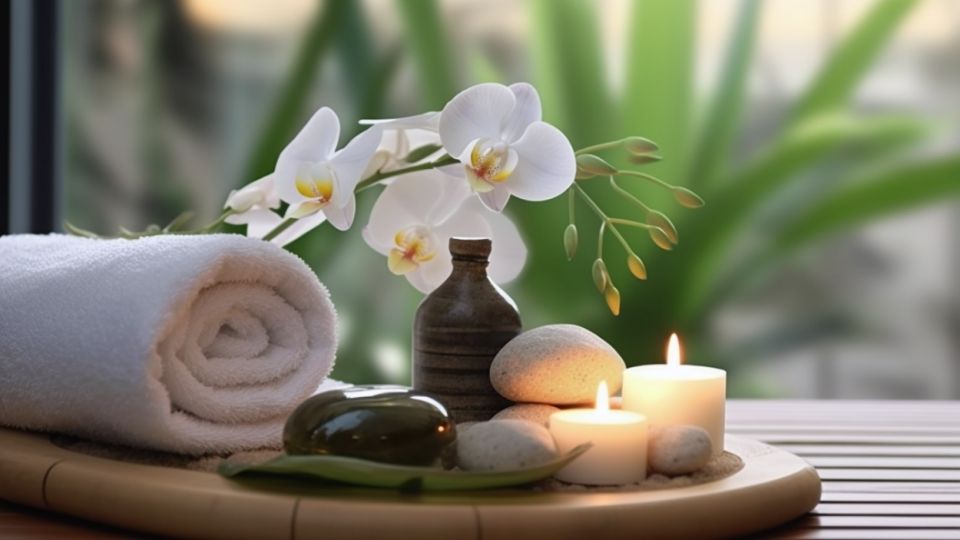
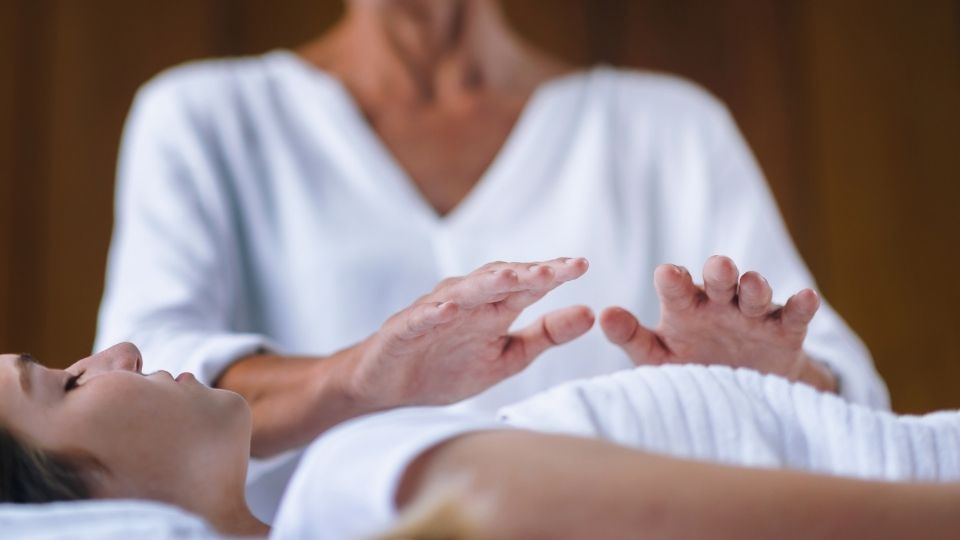
A typical session runs forty-five to sixty minutes. You stay fully clothed and lie on a massage table, a mat, or a couch, usually in a dedicated space with dim light and soft music. The practitioner may begin by asking how you are doing and whether anywhere hurts.
Then they place their hands lightly on or just above your head, shoulders, torso, and limbs, holding each position for a few minutes. NCCIH describes Reiki as an approach in which Reiki practitioners place their hands lightly on or just above a person’s body, with the goal of directing energy to help facilitate the person’s own healing response [1].
There is no manipulation, no pressure, and no massage. Nothing cracks. If you would rather not be touched at all, most Reiki practitioners will work entirely with hands hovering, and you should say so at the start.
Group Reiki works differently: several people receive attention in sequence or in a shared room, which is less individual but often less intimidating for a first Reiki experience. Either way, it is closer in feel to a quiet room with a witness in it than to a medical procedure. The same caution applies to a sound bath, which asks for similar stillness in a similar room.
If group settings are already part of how you get support, whether that means support groups in Massachusetts or a weekly meeting, a group Reiki session will feel familiar in that respect.
What People Report Feeling
Common reports from receiving Reiki:
- Warmth or tingling where the Reiki practitioner’s hands rest
- Heaviness in the limbs, the way you feel just before sleep
- Muscles releasing in the jaw, shoulders, and hips
- A sudden emotional release, including tears, with no obvious trigger
- Some people fall asleep during a session, which is not unusual.
- Some recipients report warmth near a practitioner’s hands. That sensation is subjective and does not demonstrate energy transfer.
- Occasionally, nothing much at all
Plenty of people finish a Reiki session pleasantly relaxed, and no more than that, and nothing has gone wrong. A practice does not have to be dramatic to be worth an hour.
How Reiki Is Said to Work, and What Science Says About That
Here is where honesty is more useful than enthusiasm.
The Tradition’s Own Explanation
Reiki therapy developed in Japan in the early twentieth century, and the lineage of teaching from Reiki master to student is central to how it spread. The name comes from two Japanese words, usually rendered as rei, meaning universal, and ki, meaning life energy, so the compound is often translated as universal life force energy.
Practitioners describe the practice as channeling that energy through the practitioner to the person receiving it. In that framing, life force energy flows through a person’s body, illness and distress reflect a blocked or depleted life force, and a Reiki practitioner supports the movement of healing energy to restore it. The universal life force energy is understood as something borrowed rather than owned. Some practitioners also describe clearing negative energy, or an energy transfer in which energy travels from practitioner to client.
In this tradition, the practitioner is not the source. Reiki practitioners describe themselves as a conduit for universal energy rather than as the generator of it, which is why giving Reiki is not supposed to deplete the person doing it.
That is the tradition’s own account, and it is worth understanding if you are going to try it. It is not a description of physiology, and nothing in this article should be read as a claim that a measurable healing energy exists.
What the Evidence Actually Shows
NCCIH, the National Center for Complementary and Integrative Health, is direct about this: Reiki has not been clearly established to be effective for any health-related purpose yet. It has been studied for pain, anxiety, and depression, and has shown some promising results, but nothing definitive. NCCIH also states plainly that there is no scientific evidence supporting the existence of the energy field thought to play a role in Reiki [1].
However, while the NCCIH remains cautious, newer controlled research is somewhat more encouraging. Meta-analyses have found reductions in anxiety and other symptoms, including in sham-controlled studies. High heterogeneity, limited replication, inconsistent methods, and risk-of-bias concerns mean those findings should still be considered promising rather than definitive.
There is a practical reason the research is hard. Reiki research has real blinding challenges because practitioners generally know whether they are performing Reiki. However, participants and outcome assessors can sometimes be blinded using sham-Reiki protocols in which another person reproduces the same hand positions and attention without claiming to provide Reiki energy. Several randomized trials have successfully used this approach. Small sample sizes and inconsistent protocols make the rest difficult to interpret.
So what is plausibly happening? The most likely explanation involves nothing exotic. Quiet rest, reduced stimulation, focused attention, social interaction, expectation, and changes in breathing may all contribute to how a Reiki session feels. Researchers have not established which of these factors, if any, account for Reiki’s reported effects. What is well established is the brain’s own capacity to change, and our guide to how the brain heals in recovery covers that science in plain language.
A systematic review of fifteen studies found that breathing under ten breaths per minute increased heart rate variability, raised parasympathetic activity, and produced reported reductions in arousal, anxiety, depression, anger, and confusion [2].
Add human attention, permission to do nothing, and an hour with no demands, and you have a reasonable account of why people feel better afterward that requires no energy field at all.
Using Reiki When You Are Anxious
If anxiety is what brought you here, this is the fair summary.
Evidence for anxiety is promising but not definitive. A 2024 meta-analysis found a significant overall reduction in anxiety across 13 controlled studies, but results varied greatly between studies and methodological limitations remain [3]. Reiki should therefore be considered a complementary relaxation practice, not a replacement for established anxiety treatments such as psychotherapy or appropriate medication.
Anxiety disorders respond to therapy and, for some people, medication. Reiki is not on the same level as those options and should not be substituted for them. Its honest place is alongside: something that makes a hard hour more bearable while the actual work happens elsewhere. Part of that work is learning nervous system regulation skills you can use anywhere, no practitioner required.
The same applies to the other reported health benefits you will see attached to Reiki therapy, including improved sleep quality, better quality of life, lower blood pressure, help with chronic pain, and pain management support.
What Reiki Has Been Studied For
It helps to see the whole landscape rather than one condition, because the pattern repeats.
Reiki therapy has been studied as a complementary therapy across a range of health conditions: anxiety, depression, chronic pain, sleep quality, fatigue, and overall quality of life. Much of the work has happened in oncology, where Reiki sessions are offered to cancer patients as comfort care, including in prostate cancer and palliative care settings.
Studies involving cancer patients make up a large share of the literature, which is worth keeping in mind when you see Reiki described as well-researched. Studies have also examined whether Reiki treatment can affect health markers such as blood pressure and whether repeated Reiki sessions produce cumulative benefit.
The pattern in almost all of it is the same. Small studies, weak or absent blinding, inconsistent protocols, and results that do not hold up reliably from one trial to the next. Some participants report better sleep quality, less pain, or improved quality of life. Anything that improves sleep earns its keep in early sobriety, when sleep debt is a main driver of brain fog after quitting drinking.
Reiki and Mental Health
It is worth saying clearly where mental health fits in this. Reiki has been studied as a support for mental health conditions including anxiety and depression, and the results are not strong enough to treat it as an intervention for either. The realistic potential benefits are about physical and mental health in the loose sense of feeling steadier: reducing stress in the moment, resting more deeply, and carrying less tension in the body.
This is why the potential health benefits of Reiki are best described as potential. Research has reported possible effects on anxiety, pain, fatigue, quality of life, and some physiological measures. The findings remain inconsistent and methodologically limited, so these outcomes should be described as preliminary rather than established benefits.
Where Reiki is genuinely well established is as a comfort offering inside real care. Many hospitals offer Reiki alongside oncology, surgery, and palliative services, and healthcare professionals in those settings are generally clear that it accompanies medical treatments rather than competing with them. That is the right model, and it is the model a treatment center should copy.
Reiki for Cravings and Early Recovery
There is no good research on Reiki for substance use disorder specifically. We are not going to invent any.
What there is, is a clear rationale for why a practice like this earns a place in a treatment day. Early recovery is physiologically loud. During withdrawal, stress-related circuits involving the extended amygdala become increasingly active and can contribute to anxiety, irritability, and unease. [4]. NIAAA notes that in this stage, reward circuit activity decreases while stress circuits activate, and together these changes fuel negative emotional states [5]. Acute withdrawal varies substantially by substance and individual. Some symptoms improve within days, while others can last weeks, and sleep, mood, craving, or stress-related symptoms may persist longer.
Some people in early recovery find silent meditation or prolonged stillness difficult because of anxiety, restlessness, cravings, trauma symptoms, or disrupted concentration. For those individuals, a more externally structured relaxation practice may feel easier to engage with. For meeting a craving directly, a skill like urge surfing gives you something active to do with the discomfort.
Reiki asks for nothing. You lie down, and someone attends to you carefully for an hour. Whatever the mechanism, that is a different experience from most of what early recovery contains, and the energy people describe feeling afterward is at minimum the energy of having actually rested.
Two things follow from that, and both are honest. Reiki may help someone tolerate a hard week, which matters because tolerating hard weeks is how people stay in treatment. And Reiki is not doing the clinical work. The therapy, the groups, the medical care, and the relapse prevention planning are doing that.
What Reiki Is Not
Being specific is more useful than being vague:
- It does not replace therapy, medication, or medical treatments
- Reiki is not an established standalone treatment for substance use disorder, anxiety disorders, depression, cancer, or other medical conditions. Any use for symptom relief should be complementary to appropriate clinical care.
- It has not been shown to cure or reverse any disease
- It is not a reason to delay or decline care that works
Complementary Is Not the Same as Alternative
This distinction is the most important thing on this page, and it gets blurred constantly.
Complementary means used alongside conventional care. Alternative means used instead of it. Reiki belongs in the first category and is dangerous in the second. Complementary and alternative medicine gets shortened to one phrase so often that people lose track of the difference, and the difference is the whole safety question.
NCCIH’s guidance on mind and body practices generally is worth repeating: do not use them to replace conventional care, or as a reason to postpone seeing a healthcare provider about a medical problem [6]. Someone who chooses alternative therapies over treatment for a substance use disorder is taking a serious risk. Someone who adds Reiki to a real treatment plan is not.
Any practitioner who tells you Reiki can replace your medication or your therapy is telling you something both untrue and unsafe.
Used properly, Reiki is a complementary treatment sitting beside your other treatment options, in the same family as the integrative therapies many hospitals now offer. The daily fundamentals, therapy, sleep, movement, and other ways to increase dopamine naturally, are what carry the clinical load.
It can support healing in the ordinary sense of making rest and calm more available, and that kind of healing is worth having even though it is not the dramatic healing the word may imply.
Reiki Side Effects and Who Should Be Careful
Reiki side effects are minimal. NCCIH reports that Reiki has not been shown to have any harmful effects [1], and the non-invasive nature of Reiki therapy is part of why. Nothing is ingested, nothing is manipulated, and touch is light or absent.
The honest cautions are less about physical risk and more about context:
- Emotional release. Lying still in a quiet room with someone’s attention on you can surface grief, anger, or memory unexpectedly. That is not a malfunction, but it is a good argument for receiving Reiki somewhere with clinical support nearby rather than alone in a rented room.
- Trauma history. If touch is difficult for you, say so in advance. A practitioner should work hands-off without hesitation.
- Cost and expectation. Reiki is rarely covered by insurance. Paying significant money on the promise of a cure is where the real harm in this field usually happens.
- Delayed care. The only serious risk is using Reiki as a reason not to get treatment that works.
Mind and body practices are also not universally pleasant. In one review NCCIH cites, about 8 percent of participants reported a negative effect from meditation, most often anxiety or low mood [6]. If a session leaves you agitated, that is information worth telling someone.
Reiki FAQs
Does Reiki work?
Not in the sense of having been proven effective for a medical condition. NCCIH says Reiki has not been clearly shown to be effective for any health-related purpose, and that the energy it is based on has no scientific evidence behind it. Many people do report feeling calmer and more rested after a session, which is a real experience and a modest claim.
Can Reiki help when you are anxious?
Possibly, as a complementary practice. A 2024 meta-analysis found reduced anxiety across controlled studies, but the studies differed substantially and methodological limitations remain. Reiki should not replace evidence-based treatment for an anxiety disorder.
What does Reiki feel like?
Most commonly warmth, tingling, heaviness, and a settled, rested feeling. Some people have an emotional release. Some feel very little. All of those are normal.
Is Reiki safe?
It appears to be. It is non-invasive, nothing is ingested, and NCCIH reports no demonstrated harmful effects. The main risk is using it in place of care that works.
How many sessions do I need?
There is no evidence-based answer, and nobody can tell you how much Reiki treatment is the right amount. In a treatment setting it is usually offered repeatedly as part of a weekly rhythm, which is a more sensible frame than a fixed course.
Do I have to believe in it?
No. You can regard the energy framework as metaphor and still get an hour of deep rest. Plenty of people at New Wave arrive skeptical and keep going anyway.
Sources
- National Center for Complementary and Integrative Health. Reiki. https://www.nccih.nih.gov/health/reiki
- Zaccaro A, Piarulli A, Laurino M, et al. How Breath-Control Can Change Your Life: A Systematic Review on Psycho-Physiological Correlates of Slow Breathing. Frontiers in Human Neuroscience. 2018;12:353. https://www.frontiersin.org/journals/human-neuroscience/articles/10.3389/fnhum.2018.00353/full
- Effects of Reiki therapy on quality of life: a meta-analysis of randomized controlled trials, https://pmc.ncbi.nlm.nih.gov/articles/PMC11951753/
- National Institute on Drug Abuse. Drugs, Brains, and Behavior: The Science of Addiction: Drugs and the Brain. https://nida.nih.gov/publications/drugs-brains-behavior-science-addiction/drugs-brain
- National Institute on Alcohol Abuse and Alcoholism. Neuroscience: The Brain in Addiction and Recovery. Core Resource on Alcohol. https://www.niaaa.nih.gov/health-professionals-communities/core-resource-on-alcohol/neuroscience-brain-addiction-and-recovery
- National Center for Complementary and Integrative Health. Meditation and Mindfulness: Effectiveness and Safety. https://www.nccih.nih.gov/health/meditation-and-mindfulness-effectiveness-and-safety