

Nervous system regulation is the ability to move out of a stress response and back to baseline instead of staying stuck there. In early recovery, that ability is often the missing piece. Understanding a trigger does not automatically prevent an involuntary stress response. Stress reactions involve interacting brain, autonomic, hormonal, and bodily systems, many of which begin responding before conscious reasoning catches up.
Regulation can be strengthened through both body-based and psychological approaches. Breathing, movement, sleep, mindfulness, coping skills, therapy, supportive relationships, and treatment of underlying conditions can all play a role. Breath, movement, and stillness are the levers, which is why recovery yoga sits in the daily schedule rather than at the edges of it.
What Nervous System Regulation Actually Means

Your nervous system is a complex network that runs everything from digestion to attention. The part that matters here is the autonomic nervous system, the branch that operates without your permission.
The Autonomic Nervous System in Plain Terms
A quick map. The central nervous system is the brain and spinal cord. The peripheral nervous system is the network of cranial and spinal nerves running out to the rest of you. The autonomic nervous system is the part of that network handling involuntary functions: heart rate, blood pressure, digestion, breathing. It runs largely on autopilot.
That autopilot is why insight alone does not fix a stress response. Some protective responses travel through reflex arcs that bypass conscious thought entirely, which is why you flinch before you decide to. Understanding your trigger and reacting to it anyway is not a contradiction.
How It Works
For simplicity, the sympathetic system is often described as an accelerator and the parasympathetic system as a brake. That metaphor is useful but incomplete. The two branches can oppose one another, work independently, or become active at the same time depending on the organ and situation.
The sympathetic nervous system is the accelerator. It produces the fight or flight response: heart rate up, breathing shallow, muscles tight, attention narrow. This is useful when something is genuinely wrong.
The parasympathetic nervous system is the brake. The parasympathetic system handles rest, digestion, and repair, and the vagus nerve is its main highway. Parasympathetic activity helps the body recover after stress, but recovery can take minutes or considerably longer depending on the situation and the person.
Nervous system regulation is not the absence of stress. It is the capacity to go up and then come back down. A body that can regulate itself spikes and then recovers. Stress dysregulation can appear as hyperarousal, such as a racing heart and hypervigilance, or as symptoms such as emotional numbing, immobility, or dissociation. These states involve complex brain and autonomic processes and should not be understood simply as opposite settings on one nervous-system dial.
That second state is worth naming, because people assume dysregulation always looks like anxiety. Sometimes the system can completely shut off instead: flat, foggy, disconnected, unable to care. These states can sometimes occur within the same stress-related condition, but similar symptoms can also arise from different psychiatric, neurological, sleep-related, or medical causes.
Rumination can reinforce psychological distress in a similar way, although it is a cognitive process rather than simply another autonomic state.
Why Recovery and a Dysregulated Nervous System Go Together
Substance use and nervous system dysregulation are tangled together, in both directions.
Some substances can temporarily reduce distress, anxiety, pain, or uncomfortable emotions, which may reinforce repeated use. Others can increase physiological arousal. The effects differ considerably by substance, dose, and person. Repeated reliance on a substance for relief can strengthen substance-based coping patterns, while addiction-related changes in stress and reward circuitry can make distress harder to tolerate without it.
There is also a biological layer. During withdrawal, circuits involving the extended amygdala become particularly important. Increased stress-system activity and reduced reward activity can contribute to anxiety, irritability, dysphoria, and discomfort. [1]. NIAAA notes that in this stage reward circuit activity decreases while stress circuits activate, and together these changes fuel negative emotional states [2]. Acute withdrawal varies widely by substance and degree of physical dependence.
Some symptoms improve within several days, while others can last weeks. Sleep disturbance, mood symptoms, craving, and heightened stress sensitivity may continue longer. The reward side of that equation recalibrates too, and there are concrete ways to increase dopamine naturally while it does.
Add trauma responses, chronic stress, chronic pain, and prolonged stress from the years before treatment, and the picture makes sense. This is not weakness. It is a nervous system that adapted to conditions that no longer apply.
Chronic stress before treatment, the stress of treatment itself, and a mental health condition nobody has addressed yet all push in the same direction. A dysregulated nervous system in recovery usually has more than one cause, and nervous system dysregulation rarely resolves by addressing the substance alone. The brain and the body have to be handed new conditions at the same time.
What Nervous System Dysregulation Costs You
Chronic stress can dysregulate both autonomic and HPA-axis function, altering sympathetic activity, cortisol signaling, immune function, and inflammatory processes. These changes do not always mean that stress hormones remain continuously elevated.
Chronic stress of that kind is widely associated with disrupted sleep, reduced immune function, systemic inflammation, and strain on physical health over time. This kind of chronic stress also narrows what the brain can do, because a brain running threat detection has less capacity left over for planning, memory, and patience. Our guide to how the brain heals in recovery walks through those circuits and what actually repairs them.
That reframes the work. Learning to settle a dysregulated nervous system is not self-care in the bubble-bath sense. It builds emotional resilience, and it protects the parts of daily life that recovery actually depends on: holding a job, showing up for people, sitting through a hard conversation without leaving the room.
Mental health conditions and nervous system dysregulation also feed each other. Anxiety, depression, and PTSD can all involve changes in stress processing, sleep, emotional regulation, and autonomic function, but they do so in different and highly variable ways. None can be reduced simply to a stress response that failed to switch off. Treating both matters, which is why nervous system dysregulation and mental health belong in the same conversation rather than separate ones.
Signs of a Dysregulated Nervous System
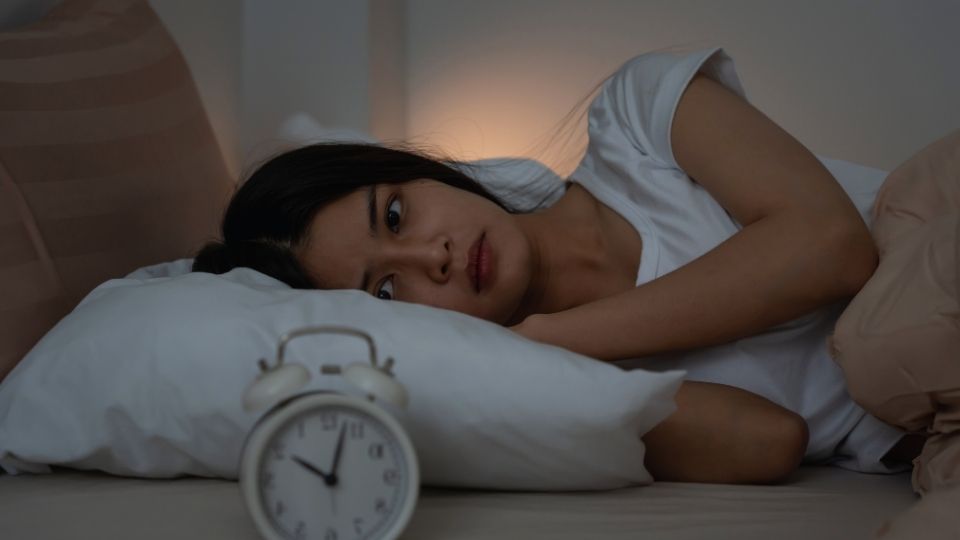
Some common signs of a dysregulated nervous system, split by how they show up.
Physical Signs
For some people, physical symptoms are the first signs they notice:
- A resting heart rate that feels high, or a pounding heart with no cause
- Heavy limbs, or a body that feels like it is moving through water
- Shallow breathing you only notice when someone points it out
- Muscle tension in the jaw, neck, and shoulders
- Digestive issues that come and go with stress
- Difficulty sleeping, or waking at three in the morning wired
- Startling at loud noises
- Fatigue that rest does not fix
Emotional and Cognitive Symptoms
Emotional symptoms and cognitive symptoms tend to arrive together, and they are easier to miss than physical symptoms because it is tempting to read them as personality:
- Feeling wired and exhausted at the same time, sometimes described as tired but not sleepy
- Racing thoughts, particularly at night
- Irritability that seems out of proportion
- Anxiety with no identifiable object
- Brain fog and concentration problems can improve as contributing factors such as withdrawal, sleep, stress, and mental health are addressed, but the timeline varies. If alcohol was part of the picture, brain fog after quitting drinking has its own causes and its own timeline.
- Negative thought patterns that loop
- Emotions that feel either too loud or completely absent
- A background sense of being on high alert, sometimes called survival mode
None of this is a diagnosis. A dysregulated nervous system produces symptoms that overlap with thyroid problems, anemia, sleep apnea, and other conditions, so a check with a primary care physician is worth doing rather than assuming the root cause is stress.
A Note on Polyvagal Theory
If you read about nervous system regulation online, you will run into polyvagal theory and its vocabulary of safety cues, ventral vagal states, and shutdown. It is worth being straight with you about its status.
Polyvagal theory is genuinely useful as a clinical metaphor, and it is also scientifically contested. A group of researchers has argued the theory is scientifically untenable, and its author has published a detailed rebuttal arguing the critique misrepresents it [3]. That debate is live and unresolved.
What this means practically: the specific mechanism may not hold up, but the practices people learn under that banner- slow breathing, gentle movement, orienting to your surroundings- are supported on their own terms. Use the tools. Hold the theory loosely, and be skeptical of anyone selling certainty about it.
How to Regulate Your Nervous System
Practical ways to re-regulate, ordered roughly by how quickly they work.
Slow Breathing
This is the most direct lever you have, and the evidence is good. A systematic review of fifteen studies of slow breathing, meaning fewer than ten breaths per minute and most often around six, found increased heart rate variability and respiratory sinus arrhythmia, greater parasympathetic activity, and reported increases in comfort and relaxation alongside reductions in arousal, anxiety, depression, anger, and confusion [4].
The practical version: breathe in through the nose for four counts, out through the mouth for six or eight. Slow, comfortable breathing is the best-supported element. A slightly longer exhale can feel calming and may increase some measures of cardiac vagal activity, but research has not established one ideal inhale-to-exhale ratio.
Some people notice a physiological or subjective change within several minutes, while others do not. The goal is comfortable, sustainable breathing rather than forcing an immediate sense of calm. Deep breathing exercises work best as a daily habit rather than an emergency measure, because you are training a response, not performing a trick.
Gentle Movement and Recovery Yoga
Gentle movement can be especially accessible when someone is fatigued, anxious, or early in recovery. More vigorous exercise can also be beneficial when medically appropriate, so intensity should be individualized rather than treated as inherently dysregulating. Walking, stretching, and yoga can help reduce muscle tension, shift attention, improve mood, and support stress management for many people.
For substance use specifically, a systematic review of eight randomized controlled trials of yoga found encouraging results on anxiety, pain, and craving, while noting that larger trials are still needed to judge how effective it is as a treatment modality [5]. That is an honest summary: promising, not proven, and worth doing.
Progressive muscle relaxation belongs here too. Tense a muscle group, hold, release, and move up the body. It gives a wired system something to do. Pairing that steadier body with a skill like urge surfing is what turns a craving from an emergency into a wave you can ride.
The Vagus Nerve, Without the Hype
Vagus nerve exercises are having a moment, and the basics are legitimate even if the marketing is overheated. Slow breathing has evidence for influencing cardiac autonomic activity. Humming and singing involve structures innervated partly by the vagus nerve, but evidence that ordinary humming, singing, or gargling meaningfully “stimulates the vagus” for therapeutic nervous-system regulation is limited. Brief cold exposure, like cold water on the face, reliably slows heart rate.
However, none of this is a cure for anything. Some of these practices can acutely alter autonomic activity, but their mechanisms and evidence differ considerably.
Sleep, Light, and Daily Habits
Aim for enough total sleep and a reasonably consistent sleep-wake schedule. A regular wake time can help anchor circadian rhythm. Regular, balanced meals can support energy, nutrition, and overall health during recovery, particularly for people whose eating patterns became irregular during active substance use.
Chronic sleep loss keeps stress hormones elevated and makes every other practice harder.
Daily habits beat intensity here. Nervous system health is built the same way physical health is, in small repeated doses.
Somatic Work
Somatic therapy is the broad name for approaches that work through the body rather than through talking about the body. Somatic experiencing is one specific well-known method, and somatic experiencing practitioners work with sensation and titration rather than narrative. Somatic work more generally includes body scans, orienting exercises, grounding, and noticing sensation in the body without trying to fix it.
Grounding techniques belong in this category. The five four three two one method, naming five things you can see, four you can hear, three you can touch, two you can smell, and one you can taste, works by pulling attention outward and interrupting a threat loop. It is simple enough to use in a parking lot.
The core skill is interoception, the ability to feel what is happening inside you. That sounds soft. It is the foundation of self-regulation, because you cannot calm a state you cannot detect.
Co-Regulation With Other People
Nervous systems respond to each other. Sitting with someone who is genuinely calm tends to settle your own state, a process usually called co-regulation, and it is one reason group treatment does something solo effort cannot. It also explains why a room matters. For some people, supportive relationships make regulation easier, which is one reason social connection can be valuable alongside individual coping skills.
Sound and Stillness
Sound-based practice deserves a place on this list. Sustained tone, whether from a sound bowl, a drum, or music you love, gives a restless mind something to hold while the body settles. That is the whole premise of a sound bath, which is why it shows up in so many regulation routines. For people who find sitting meditation impossible in early recovery, sound is often the way in.
What Does Not Restore Balance
A short list of things that feel like regulation and are not:
- Caffeine to get going and alcohol to come down, which is a stress cycle with extra steps
- Compulsive scrolling may provide temporary distraction without addressing the source of distress, and late-night use can interfere with sleep for some people.
- Waiting to feel calm before you practice, which is backward
You do not calm down and then practice. You practice repeatedly, and the ability to regulate grows until calm becomes more available.
Where This Gets Practiced Every Day
Reading about regulation does very little. Doing it daily, with other people, in a room where it is normal, does a lot.
At New Wave Recovery Center, this is the schedule rather than an add-on. Recovery yoga, sound bowls and sound baths, individual and group Reiki, mindfulness groups run by Charles, one of the owners, art therapy, and experiential work outdoors on hikes and at the beach. Here is what Reiki is if you have never tried it and want to know what a session looks like.
Animal-assisted activities are also part of New Wave’s holistic programming and may provide comfort and connection for some clients.
Self-regulation is one of the things New Wave sets out to build deliberately, alongside self-awareness, accountability, and consistency. It is also why the space is built the way it is: big leather couches instead of stiff chairs, bright hallways, a window in every office. A warm, comfortable environment can help people feel less institutional and more at ease, which New Wave deliberately emphasizes in its facility design.
New Wave is family-owned and run by people in long-term recovery, on the North Shore of Massachusetts about ten minutes from the beach. Day treatment runs about six weeks, the intensive outpatient program about three months, and the Relapse Prevention Program up to six months. New Wave is in-network with WellSense and approved through MassHealth. When you call, you talk to someone in recovery.
Nervous System Regulation Frequently Asked Questions
How long does it take to regulate your nervous system?
A single stress response can settle in minutes with slow breathing. Improving regulation skills generally takes repeated practice over time, but there is no universal timetable. Some changes can happen quickly, while others develop over weeks or months.
What are the first signs my nervous system is calming down?
Possible signs that stress is becoming easier to manage include improved sleep, less muscle tension, fewer episodes of racing heart, reduced startle, better concentration, and greater ability to recover after difficult situations. People notice these changes in different orders.
Can you regulate your nervous system without therapy?
Untreated mental health conditions can contribute to persistent distress, sleep problems, avoidance, emotional dysregulation, or other symptoms that breathing exercises alone are unlikely to resolve.
Is a dysregulated nervous system permanent?
Stress-related patterns are often modifiable, and the nervous system retains substantial capacity to adapt. How much symptoms improve depends on their cause, which is why persistent or severe symptoms deserve medical or mental health evaluation.
Sources
- National Institute on Drug Abuse. Drugs, Brains, and Behavior: The Science of Addiction: Drugs and the Brain. https://nida.nih.gov/publications/drugs-brains-behavior-science-addiction/drugs-brain
- National Institute on Alcohol Abuse and Alcoholism. Neuroscience: The Brain in Addiction and Recovery. Core Resource on Alcohol. https://www.niaaa.nih.gov/health-professionals-communities/core-resource-on-alcohol/neuroscience-brain-addiction-and-recovery
- Porges SW. When a Critique Becomes Untenable: A Scholarly Response to Grossman et al.’s Evaluation of Polyvagal Theory. Clinical Neuropsychiatry. https://pmc.ncbi.nlm.nih.gov/articles/PMC12937496
- Zaccaro A, Piarulli A, Laurino M, et al. How Breath-Control Can Change Your Life: A Systematic Review on Psycho-Physiological Correlates of Slow Breathing. Frontiers in Human Neuroscience. 2018;12:353. https://www.frontiersin.org/journals/human-neuroscience/articles/10.3389/fnhum.2018.00353/full
- Yoga for Substance Use: A Systematic Review. https://pubmed.ncbi.nlm.nih.gov/34535521/